
The Reality of the ‘Off-Grid Dream’: Moving Into the Wild
Full Transparency: I value your time and attention. You won’t find annoying pop-up ads here!
Instead, I use affiliate links. If you buy something, I may earn a small commission at zero extra cost to you.
I only recommend genuine solutions that actually serve our off-grid homestead, business, and homeschool life. Read my full Affiliate Policy for details.
Transitioning from a comfortable suburban home to a 75-acre bush block is a massive shift, and the gap between buying the land and actually moving your life onto it is filled with a lot of manual labour and is where the real education begins!
In this post, I’m sharing the reality of our first few weeks at Okiwi Bay—from Ryan’s week with the shovel preparing the driveway, to the night our entire life was unloaded onto tarpaulins in the damp bush.
This is the story of how we traded our services for a caravan and a spade, and why we didn’t let the initial struggle stop us.
You’ll see that the biggest hurdle isn’t the lack of services, but developing the resilience to trust your vision and shift into a ‘get on with the job’ mindset, helping you distinguish between a temporary struggle and a failed vision so you can keep moving forward.
In my last post, When Your Compass Points Elsewhere: Cutting Through the Noise to Find Your ‘Home’, I talked about the excitement of buying our 75-acre bush block in Okiwi Bay sight unseen. By September 2014, the ‘honeymoon phase’ of paperwork was over. It was time to actually move into the wild.
We had sold our comfortable home, and in its place, we bought a second-hand caravan online. The property was just a small clearing in the middle of dense bush—no power, no water, and no services. It was the definition of a blank canvas, but as we were about to find out, the canvas was a lot more rugged than we’d imagined.
The Week of the Shovel
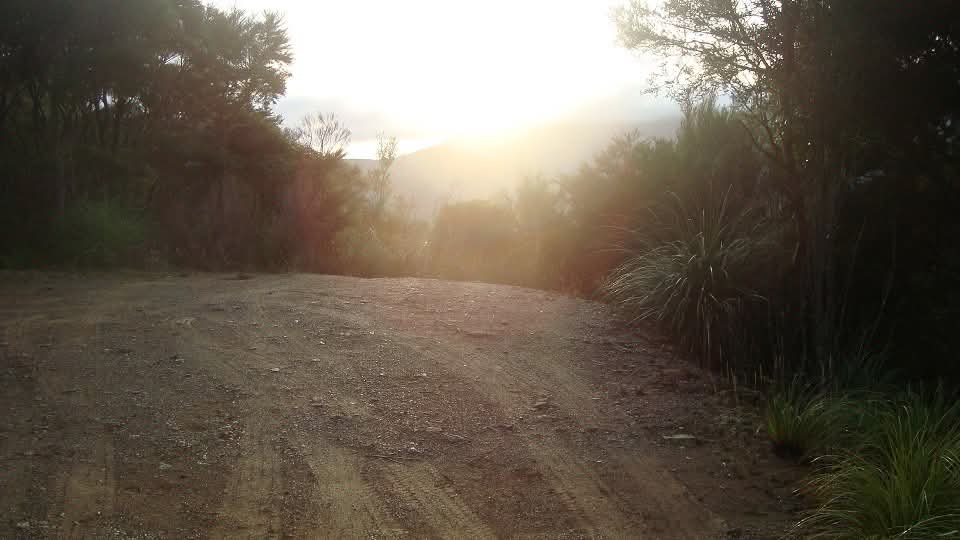
Ryan headed up from Queenstown a week before me, traveling with just our dog and a trailer. His mission was simple but grueling: fix the road.
The property had been on the market for years, and the 300-metre gravel driveway was a disaster of ruts and washouts from the Marlborough rain. We knew we’d never get a caravan up there in its current state. Ryan spent that entire week living in a tent, manually filling potholes with a spade and shovel just so we could reach our new ‘home’.
When I finally arrived with my parents and our 20-month-old daughter, we towed the caravan up that hand-mended road. We spent the first day wrestling with the awning and setting up the bare essentials:
- Water: A 20L plastic drum filled from the stream (our only plumbing).
- Power: An 800W generator used sparingly to top up the caravan battery.
- Infrastructure: A caravan and the hope that the weather would hold.
I’ll never forget the look on my mum’s face when they prepared to leave us there. I could see her thinking: What on earth is my daughter doing? She’s an hour from the nearest town, in the bush, with a toddler and no running water.
But Ryan and I had a vision. We knew if we hated it, we could always sell—but we weren’t ready to give up just because it was going to be hard, and especially before the first night was over!
The 10-Cubic-Metre Mountain
A week after we arrived, our moving truck showed up. It quickly became clear that despite Ryan’s heroics with the shovel, the truck wasn’t going to make it up the driveway.
As the sun began to set, the movers unloaded 10 cubic metres of our entire life onto tarpaulins in the middle of the bush, only half way up our driveway. Our lounge suite, mattresses, and boxes were sitting on the damp earth.
We spent the evening ferrying what we could up to the caravan and packing the rest into plastic bins, desperately pulling tarps over the mountain of stuff that wouldn’t fit.
Living in a caravan is doable, but it’s a tight squeeze with a toddler and a dog and when your ‘living room’ is currently under a tarpaulin in the rain.
Nothing Like a Deadline to Get You Moving…
We lived like that for a few weeks, slowly finding our rhythm in the wild and exploring our future home. However, we soon received some news that put our ‘resourceful duo’ skills to the test: Ryan’s mum decided she was coming all the way from the UK to spend the summer with us – in a few weeks time!
Looking at our cramped caravan and the piles of boxes under tarps, we realised we had a major problem. We couldn’t exactly put her under a tarp! We had a deadline, and we needed to build something—fast.
Lessons from the Move-In
The transition from suburban comfort to ‘caravan survival’ was our first real masterclass in off-grid living:
- Access is Your First Priority: You can have the best house site in the world, but if you can’t get a vehicle (or a delivery truck) to it, you’re stuck. Always survey your driveway after a rain event before moving day.
- The 20L Rule: You quickly realize how much water you waste when you have to carry every litre from a stream. Ensure your water is manually manageable over your terrain—any larger can be a hazard, any smaller and you’re wasting energy on extra trips.
- Manage the ‘Tarp Factor’: If you’re moving to raw land, invest in high-quality, heavy-duty tarpaulins and watertight plastic crates. Household furniture doesn’t like the bush, and ‘temporary’ storage often needs to last longer than you think.
- Maintain the Vision, Not Just the Site: There will be moments (like seeing your mattress on a tarp in the dirt) where you’ll question your sanity. Revisit your ‘why’—for us, it was that dream of self-sufficiency and our children growing up on the land and by the sea.
- Deadlines Breed Creativity: Nothing motivates an industrial designer and an engineer like a visiting mother-in-law needing a roof over her head. This forced us to stop ‘camping’ and get on with building our future!
- Vision Trumps Doubts: When others doubt your path, it is often a reflection of their own fears and perceived limits rather than your potential. Stay committed to your vision, knowing that you can always pivot later. Don’t let someone else’s internal alarm system stop you before you’ve even started!.
The real shift into off-grid life happens the moment you stop overthinking the discomfort and start focusing on the next task. It’s about developing the grit to see past a messy transition and recognise that most hurdles are just temporary logistics, not a reason to quit.
And remember…when others question your vision, they’re usually just revealing the boundaries of their own limits. Your vision is yours for a reason!
About the author: Drawing from over a decade of off-grid living, I share relatable strategies and practical insights to help you navigate the complexities of homesteading, homeschooling, and business! Find out more about me…
Kirsteen
Author, The Off Grid Canvas
Leave a Reply